Soccer Kick Arcade
Reviews
Soccer Kick Arcade succeeds by narrowing its scope: one player, one ball, one well-timed kick. The absence of complex rules makes it immediately accessible, while the growing number of blockers provides a genuine difficulty curve. Its bright, family-friendly presentation suits younger players and anyone wanting a quick distraction. The main limitation is depth—there is no team management, multiplayer, or tactical variety beyond shot timing. Players seeking a richer soccer simulation may find it too simple, but for casual arcade fans, it delivers exactly what it promises.
Description
Timing Over Tactics
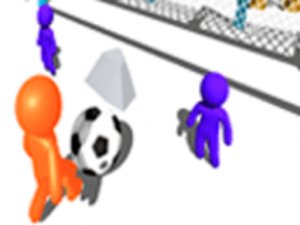
Soccer Kick Arcade strips soccer down to its most tense moment: the shot. There is no dribbling, no passing, and no field to manage. You control a single player, and your only job is to kick the ball into the net. Opponent players slide into your path to block the shot, so the real challenge is reading their movement and releasing your kick at the exact right instant. Tap or click too early and the ball hits a defender; too late and the chance is gone. That single decision—when to shoot—is the entire game.
How Difficulty Scales
The game starts with a manageable number of blockers and gradually adds more as you score. Each new level increases the density of opponents between you and the goal, which shrinks the window for a clean shot. Because the controls never change, the difficulty comes purely from how crowded the path becomes and how quickly you must judge the gap. This creates a steady ramp that rewards players who stay calm under pressure rather than those who react fastest.
Visual Style and Session Length
Bright, colorful graphics keep the action readable even when several opponents are on screen. The family-friendly presentation means there is no harsh imagery or complex interface to learn. Rounds are short by design, making the game easy to pick up for a few minutes at a time. Progression is measured in points and levels, so there is always a clear next target without any long-term commitment.







Editorial Notes