Neon Block Breaker Arcade
Reviews
Neon Block Breaker Arcade keeps its scope tight: five levels, one-input steering, and a star system that rewards flawless runs. The neon block patterns create the real difficulty, since hitting any obstacle costs you a perfect rating. A final boss fight shifts the focus to pattern recognition. It suits players who enjoy short, precision-based sessions and do not mind replaying stages to improve.
Description
Steering Through Shifting Barriers
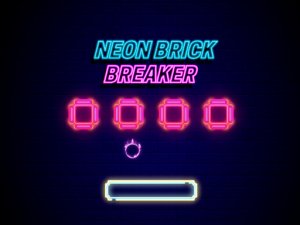
In Neon Block Breaker Arcade, you control a ball that rolls forward automatically. Your only input is direction: use the mouse or touchscreen to steer left or right. Neon blocks appear and move to obstruct your path, so you must read their motion and adjust early. The goal is simple—reach the glowing hole at the end of each stage without colliding with any block. [IMG_1]
Five Levels, One Boss
The game contains five levels, each introducing new block patterns. Early stages establish basic timing, while later ones combine movement types that demand sharper anticipation. After clearing all five, a boss fight awaits. That encounter shifts the challenge from pure navigation to pattern recognition under pressure, asking you to spot safe openings as they appear. [IMG_2]
Stars, Replays, and Clean Runs
A star rating system tracks your performance. To earn three stars on a level, you must complete it without hitting any blocks and then defeat the boss. This structure encourages replaying stages to learn block timing and aim for flawless runs. Because the controls are minimal, improvement comes from memorizing patterns and reacting faster, not from unlocking abilities. [IMG_3]
Who This Suits
Neon Block Breaker Arcade is built for short sessions. Its bright neon visuals and one-input control scheme make it approachable for casual players, while the star system and boss fight give dedicated players a reason to refine their runs. The difficulty curve is tied directly to block movement, so patience and observation matter more than reflexes alone.








Editorial Notes