Fantastic Orange
Reviews
Fantastic Orange is a hypercasual physics puzzle with a clear loop: place oranges, avoid spikes, reach the bucket. Its strength lies in how physics turns each level into a small experiment, rewarding careful observation over reflexes. The light story and simple controls make it approachable, while later block arrangements add genuine challenge. It suits players who enjoy logic puzzles and do not mind trial and error. The main limitation is that the input does not describe level count or variety, so replay value is unclear.
Description
Balancing Oranges on Blocks
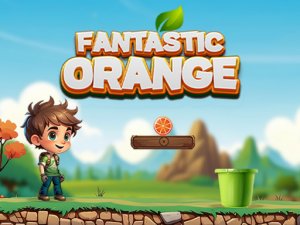
Fantastic Orange asks you to guide a character named Richer as he collects oranges in a bucket. The setup is straightforward: oranges rest on blocks, and you must position or balance them so they roll or drop into the bucket. Spikes scattered along the path destroy any orange that touches them, so each placement matters. The challenge comes from predicting how the fruit will move once you commit to a solution. [IMG_1]
Physics-Based Problem Solving
Every level presents a new arrangement of blocks and obstacles. Because the game uses physics, an orange's path depends on angles, momentum, and the surfaces it contacts. You cannot simply drag an orange to the bucket; you have to think about how it will tip, roll, or settle. This turns each screen into a small experiment where trial and error is part of the process. The controls are simple, but the solutions are not always obvious.
Visuals and Accessibility
The game uses high-quality graphics and keeps its file size small, so it runs without demanding much storage. Its hypercasual design means you can pick it up for a few minutes or work through several puzzles in one sitting. There is no complex tutorial or steep learning curve. The difficulty rises gradually as block layouts become more intricate and spikes force you to reconsider your approach. [IMG_2]
Who It Suits
Fantastic Orange fits players who enjoy logic puzzles with a physical twist. The story frame—Richer and his grandfather turning a study break into a game—sets a light, relaxed tone. If you like games where a single wrong move sends your progress tumbling, this one rewards patience and creative thinking. It is less about reflexes and more about observing a level, forming a plan, and adjusting when the physics surprise you.








Editorial Notes