Fresh Fruit Stacking Challenge
Reviews
Fresh Fruit Stacking Challenge keeps its scope tight: stack fruits, avoid drops, beat your score. The drag-and-drop interface is immediately understandable, and the lack of a timer makes it approachable for younger players or anyone wanting a low-pressure break. The main limitation is variety — the core loop stays the same, and long-term appeal depends on how much you enjoy chasing personal bests. Best suited for casual players who value accessibility over deep progression.
Description
Stacking Mechanics and Player Goal
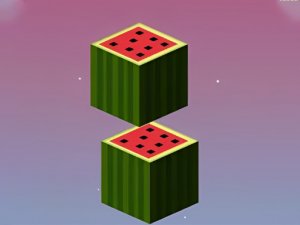
Fresh Fruit Stacking Challenge asks you to pile a colorful assortment of fruits onto a single platter. You drag and drop each piece, positioning it so the stack stays upright. Every fruit that stays put adds to your score. The round ends the moment any fruit falls off the platter. There is no timer or move limit — the only pressure comes from your own growing tower and the precision it demands.
Controls and Moment-to-Moment Decisions
Controls are intuitive: pick a fruit, drag it over the platter, and release to place it. The challenge lies in judging where the center of mass will sit. Place a piece slightly off-center and the whole stack leans; correct it with the next fruit or risk a collapse. As the tower grows taller, each placement becomes more consequential, so you naturally slow down and think about balance rather than speed. [IMG_1]
Visual Style and Session Length
Vibrant graphics and a variety of fruit types keep the screen visually engaging. The game suits quick sessions — a single round can last under a minute — but the simple loop also supports extended play when you want to chase a personal best. There are no complex menus or story beats to sit through, which makes it easy for players of any age to start stacking right away.
Approaching Higher Scores
Because the game ends on the first drop, consistency matters more than risky placement. Building a stable base with larger fruits and keeping the stack roughly symmetrical reduces wobble. Taking an extra second to line up each piece often pays off more than rushing to add another layer. The difficulty curve is self-imposed: the higher you build, the more precise every drag-and-drop must be.







Editorial Notes