Block World Jigsaw Puzzle
Reviews
Block World Jigsaw Puzzle delivers exactly what its name suggests: a digital jigsaw experience wrapped in a blocky aesthetic. The nine included images and four piece counts (16, 36, 64, 100) offer reasonable variety for casual play. The lack of time limits and simple drag-and-drop controls make it approachable for beginners and children. However, the game does not introduce unique mechanics beyond standard jigsaw assembly, so experienced puzzle players may find it light on challenge. It is best suited for those seeking a low-pressure, family-friendly activity.
Description
Assembling Blocky Scenes
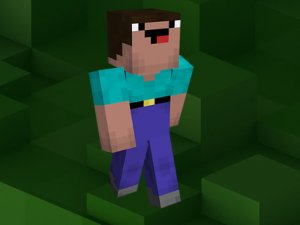
Block World Jigsaw Puzzle takes the familiar jigsaw format and applies a blocky visual style. The game includes nine distinct images that draw on landscapes and characters from a block-building universe. Each picture is divided into pieces that players must arrange correctly to complete the scene. The objective is straightforward: place every piece in its proper position. There are no timers or score penalties, so the focus stays on observation and spatial reasoning rather than speed.
Choosing Your Challenge
Before starting a puzzle, players select one of the nine images and then pick a difficulty level. The piece counts are 16, 36, 64, and 100. Lower counts suit quick sessions or younger players, while higher counts provide a longer, more demanding task. The pieces appear scattered on the screen, and the player drags each one into place. Because the difficulty is chosen upfront, the same image can be attempted at different challenge levels, which adds replay value without requiring new content.
Controls and Accessibility
The control scheme is simple: click, drag, and drop. This makes the game approachable for players who are new to digital puzzles. There is no need to rotate pieces or manage complex tools. The absence of time pressure means players can work at their own pace, take breaks, and return without losing progress. The blocky art style keeps shapes and colors distinct, which helps when sorting pieces by pattern or color.
Strategies for Completing Puzzles
Starting with a lower piece count helps new players get used to the drag-and-drop mechanic. A common approach is to find edge pieces first and build the frame, then fill in the interior. Grouping pieces by distinct colors or patterns can also speed up assembly. Since there is no timer, accuracy matters more than speed, but players can still try to beat their own completion times if they want an extra challenge.


Editorial Notes