Elevator Descent Arcade Puzzle
Reviews
Elevator Descent Arcade Puzzle strips the falling-elevator idea down to one input: hold to brake, release to drop. That simplicity makes it easy to pick up, but the rotating bars, rods, stacked balls, and flippers demand real timing discipline. Unlockable skins like cars and planes add personality without affecting play. The narrow scope and short runs suit players who want a quick reflex challenge, though anyone seeking depth or variety beyond obstacle patterns may lose interest.
Description
The Drop-and-Brake Loop
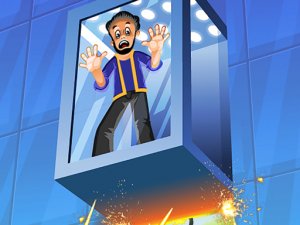
Elevator Descent Arcade Puzzle hands you a single job: get a falling elevator from the top of a tall building to the bottom without hitting anything. The control scheme is one finger. Press and hold to slow the elevator down; let go and gravity takes over. That is the entire input vocabulary, and every decision in the game flows from it. Obstacles sit between you and the floor, so the real skill is reading their movement and choosing the moment to release.
Reading the Obstacle Patterns
Each attempt throws a different arrangement at you. Rotating bars sweep across the shaft, rods slide or spin, stacked balls roll into your path, and flippers snap out at unpredictable angles. Touching any of them bounces the elevator and ends the run. Because the obstacles move on their own timers, you cannot memorize a single safe route. You watch for gaps, time your drop, and brake just enough to slip through. Later levels mix these elements together, so the timing you learned on one obstacle type gets tested against another.
Skins, Rewards, and Short Sessions
The elevator itself is customizable. You can unlock funny skins such as cars, buses, and planes, which replace the standard cabin without changing how it handles. A stack reward system may give bonuses for consecutive successful descents, adding a light incentive to string together clean runs. Bright colors and smooth animations keep each crash readable, so you can see exactly what clipped you. The whole loop is built for quick sessions: one attempt lasts seconds, and restarting is instant.
Who This Suits
If you like reflex-based challenges where the difficulty comes from timing rather than complex rules, this fits that mold. The learning curve is gentle at first because the controls are so simple, but the later obstacle combinations demand patience and a steady hand. Players who prefer story, strategy, or long progression systems will find the scope here narrow. Anyone looking for a casual time-killer with a clear goal, though, gets exactly that: reach the bottom, rescue the character, try again.





Editorial Notes