Creative Climbing Puzzle 3D
Reviews
Creative Climbing Puzzle 3D turns a simple drawing action into a varied puzzle challenge. The need to match leg shape to obstacle type keeps each level feeling distinct, and immediate feedback makes trial and error productive rather than frustrating. Its minimal controls and family-friendly design suit casual players and children. The trade-off is a lack of story or competitive depth, so it works best as a relaxed problem-solving game rather than a long-term obsession.
Description
Sketching Legs to Overcome Obstacles
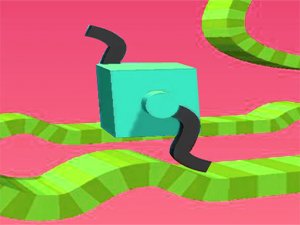
The central mechanic in Creative Climbing Puzzle 3D is straightforward: you draw legs onto the character using a finger or mouse. The shape and size of each leg directly determine whether the character can clear the obstacle ahead. A tall wall calls for long legs, while a wide gap might need short, sturdy ones. There is no single correct answer per level, which keeps the puzzle open-ended and encourages repeated attempts.
Reading the Terrain
Before drawing, you need to assess the obstacle's height, width, and position. The game provides immediate visual feedback after each attempt, so you can see exactly where a leg failed to reach or where it buckled. That feedback loop is the main learning tool. Over time, you develop a sense of proportion and angle without needing explicit instructions.
Controls and Accessibility
Controls are minimal: draw, observe, adjust. There are no complex button combinations or timed inputs. This simplicity makes the game approachable for younger players and anyone looking for a low-pressure puzzle experience. The 3D arcade presentation adds depth to the climbing paths, but the core interaction remains a single drawing action.
Who It Suits
Because the game is family-friendly and has no fail states beyond a failed climb, it works well for casual sessions. Players who enjoy sandbox-style problem-solving or physics-based drawing games will find the level variety engaging. Those seeking a narrative or competitive challenge should look elsewhere, as the focus stays on creative experimentation.







Editorial Notes