Children's Room Escape Puzzle
Reviews
Children's Room Escape Puzzle is built around careful examination rather than action. The bright children's room setting supports its family-friendly design, and the inventory system adds a layer of logic by letting players combine items into new tools. Visual feedback keeps progress readable, and the absence of timers makes it approachable for younger players and escape room beginners. The main limitation is that it targets a gentle challenge level, so players seeking complex or high-pressure puzzles may find it simple.
Description
Examining the Room
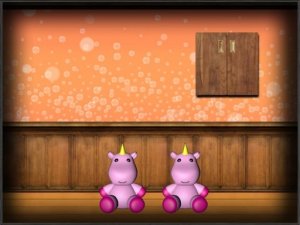
The game places players inside a bright, toy-filled children's room. Every object — drawers, curtains, shelves, furniture — can be clicked and inspected. The goal is to find the key that unlocks the door, but reaching it requires noticing details that are easy to overlook. Visual feedback confirms when a correct action has been taken, so progress is always clear.
Inventory and Item Logic
Useful items found during exploration are stored in an inventory. Some of these items can be combined to create new tools, which then become the solution to a later puzzle. This means the inventory is not just a collection box; it is an active part of the problem-solving loop. If progress stalls, revisiting the inventory and testing combinations is often the next step.
Puzzle Design and Pacing
Puzzles take the form of codes to enter or pieces to arrange. Each one is a small step toward the exit, and none rely on speed or reflexes. The game has no timers, so players can think through each interaction without pressure. That structure makes it suitable for children and casual players who prefer observation and logic over action.
Who It Suits
Because the setting is a children's room and the content is designed to be family-friendly, the game targets younger players and beginners to escape-room style games. Experienced puzzle fans looking for a gentle, low-stakes challenge can also play at their own pace. The experience is built around curiosity and careful thinking rather than tension or fast decisions.






Editorial Notes