Slime Factory Manager

Reviews
Slime Factory Manager delivers a straightforward idle loop: click creatures, watch slime travel to trucks, and reinvest coins into faster production. Its two-level layout makes progress visible, and WebGL support means it runs in most browsers without installation. The game suits casual players and families who want short, stress-free sessions. The main limitation is depth—upgrades and clicking are the core, so anyone seeking complex strategy may find it too simple.
Description
Production on Two Floors
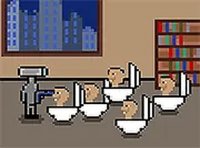
Slime Factory Manager splits its operation across two levels. On the lower floor, slime creatures generate colorful slime on designated crates. That output travels up a conveyor belt to the second floor, where trucks wait to be loaded for delivery. Your role is to keep both stages moving and ensure a steady flow from creature to crate to truck.
Clicking and Upgrades
Clicking directly on a slime creature speeds up its production. As slime accumulates, a progress indicator fills and eventually unlocks upgrade options. Coins from truck sales fund improvements on either floor: you can add more slime creatures, increase conveyor belt speed, or expand truck capacity. These choices shape how quickly raw slime becomes sellable product.
Progression and Pacing
The game leans into idle mechanics, so progress continues even when you are not actively clicking. That makes it suitable for short sessions or background play. Upgrades are the main driver of growth, and balancing investment between production and transport prevents bottlenecks. The two-level layout gives clear visual feedback: you can watch slime move from creation to sale as your factory expands.
Accessibility and Audience
Built with WebGL, the game runs in modern browsers on desktop and mobile. Bright graphics and simple controls keep it approachable for kids and casual players. There is no complex setup or steep learning curve. Released in January 2023, it targets anyone who wants a low-pressure simulation with a clear loop of clicking, earning, and upgrading.







Editorial Notes