Sensory Pop Puzzle Adventure

Reviews
Sensory Pop Puzzle Adventure is built for players who want a calm, repetitive activity rather than a difficult puzzle. The tap-to-clear mechanic is immediately understandable, and the rotating board shapes—grids, animals, and geometric figures—add visual variety without complicating the rules. Soft pop sounds and a shifting background tone reinforce progress quietly. Progression unlocks new patterns and palettes, giving light structure. The main limitation is depth: players seeking strategic decisions or escalating difficulty will not find them here. It best suits younger children or anyone wanting a low-pressure, sensory-focused break.
Description
A Single, Satisfying Action
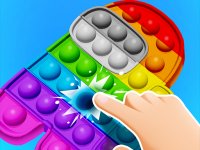
Every board in Sensory Pop Puzzle Adventure is built around one repeated action: tapping a bubble to make it vanish. The circles are arranged in grids, animal silhouettes, and geometric figures, and the goal stays the same across all of them—clear the board completely. Because there is no timer, score penalty, or complex rule set, the game removes the pressure that often comes with arcade puzzles. The immediate pop sound and brief visual effect give each tap a clear result, which helps players stay oriented without needing instructions.
Board Layouts and Visual Style
Layout variety comes from the shapes the bubbles form rather than from new mechanics. Simple grids sit alongside animal shapes and geometric patterns, and the color palette shifts between boards. That rotation keeps the screen from feeling stale even though the core interaction never changes. Rounded edges, soft gradients, and an uncluttered interface keep attention on the bubbles themselves. For younger players, the recognizable animal outlines can make a board feel more approachable than an abstract grid.
Sound as a Core Element
Audio is not background decoration here; it is part of the feedback loop. Each pop produces a gentle noise similar to pressing plastic bubble wrap, and a subtle background tone shifts as a board is cleared. The sound design stays quiet enough for shared or quiet environments, which matters for a game aimed at kids. Combined with the visual pops, the audio reinforces progress without demanding extra attention.
Progression Without Pressure
Clearing boards gradually opens new patterns and color schemes, and the game may include options to personalize the popping surface with a preferred palette. These rewards function as light encouragement rather than gates or difficulty spikes. Players who want a goal have something to work toward, while those who simply enjoy the popping action can keep playing without feeling blocked. The result is a casual structure that respects the calming tone of the core mechanic.



Editorial Notes