Retro Court Rivalry
Reviews
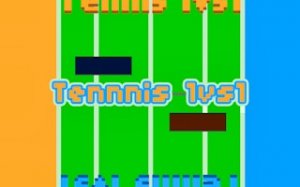
Retro Court Rivalry succeeds by removing distractions. Two players share a screen, control paddles with dedicated keys or buttons, and race to 10 points. Rallies speed up with each return, so matches grow tenser without adding power-ups or special moves. The pixel-art court and subtle ball trail keep the action readable. This is a strong pick for friends or family seeking quick, skill-based competition, though the lack of single-player or online modes limits solo play.
Description
Match Structure and Scoring
Retro Court Rivalry distills tennis to its competitive core: two players, one net, and a first-to-10-points rule. Each rally starts at a moderate pace but accelerates with every successful return, so early points feel manageable while later exchanges punish slow reactions. There are no power-ups, timers, or special moves. Every point is decided by positioning, timing, and shot placement.
Controls and Shot Placement
Each player uses a dedicated set of keys or buttons to move their paddle vertically along the court. A separate input swings the paddle to strike the ball. Because the controls are so simple, success depends on reading the ball's trajectory and anticipating the opponent's next move. Angling shots toward open spaces forces the other player to cover more ground. The input is responsive, so actions feel direct and intentional.
Pixel Art and Court Readability
The pixel-art graphics evoke early arcade machines. The court uses clean lines and a limited color palette, keeping attention on the action rather than elaborate backgrounds. A subtle trail follows the ball, helping players track its speed and direction during fast exchanges. This minimalist look keeps the experience readable even when rallies reach high speeds.
Skill Development Through Play
Improvement comes from practice and observation. New players learn to position their paddle early, reducing last-second adjustments. Experienced players read opponent habits—whether they favor one side or tend to hit certain angles. The increasing rally speed adds tension, as a single misjudgment can cost a point. Consistent timing matters more than raw speed, and court awareness grows with each match.
Local Multiplayer Only
Retro Court Rivalry is built entirely around local two-player competition. There is no single-player mode or online matchmaking. Friends or family sit side by side for head-to-head matches. The short point format keeps each match brisk, encouraging multiple rounds. With no complex menus or settings, players can jump into a game within seconds—ideal for social gatherings or casual play sessions.








Editorial Notes