Whose Tail? Animal Match Puzzle
Reviews
Whose Tail? Animal Match Puzzle delivers a focused matching activity for kids. The move-counting system encourages thoughtful play, and the 10 progressive stages offer a clear sense of advancement. Its strengths lie in simplicity and educational value, though older players may find it limited. Best suited for parents seeking constructive screen time for early learners.
Description
Matching Animals to Their Tails
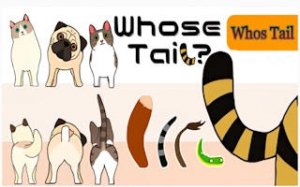
Whose Tail? Animal Match Puzzle asks children to reunite animals with their missing tails. The screen shows animals and separate tails, and the player selects two images to swap them. Each swap counts as one move, so the goal is not just to finish but to finish efficiently. The game relies on visual clues such as colors and patterns, turning each match into a small observation exercise.
How Moves Shape the Challenge
Because every swap is counted, players are encouraged to think before acting. Rushing leads to extra moves; pausing to compare shapes and markings leads to cleaner solutions. This simple feedback loop helps children practice concentration and planning without feeling pressured. Completing a stage with fewer moves gives a tangible sense of progress and builds confidence.
Progression Across Stages
The game includes 10 challenge stages. These stages are designed to increase difficulty progressively, so earlier puzzles are simpler and later ones demand closer attention to detail. This structure keeps the experience accessible for young players while still offering a sense of advancement. The friendly animal graphics and vibrant colors make the learning process feel playful rather than academic.
Designed for Young Learners
Whose Tail? is built for children, with intuitive controls that require only touching or clicking. No external plugins are needed, and the game works across devices. It offers constructive screen time that supports developmental milestones like memory and observation. Parents looking for a safe, educational puzzle will find that the game focuses on cognitive skills rather than complex rules.





Editorial Notes