Cards Memory Match Brain Game

Reviews
Cards Memory Match Brain Game delivers exactly what its name suggests: a clean, no-frills memory challenge. The mechanic is universal—flip two cards, remember positions, find pairs. Difficulty scales through larger grids, and the option to play with or without a timer adds flexibility. It is not a deep or story-driven experience, but it does not try to be. The main limitation is repetition; without additional modes or variations, the appeal depends on your interest in pure recall practice. Suitable for all ages, especially juniors and casual players seeking a quick mental workout.
Description
How the Matching Works
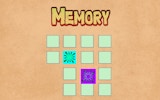
Cards Memory Match Brain Game presents a grid of face-down cards, each hiding a unique symbol or image. On each turn, you flip two cards. If they show the same image, they remain face-up and you earn points. If they differ, both flip back after a brief moment, and you must remember what you saw. The core loop is simple: reveal, compare, recall. Success depends on tracking positions across turns, not on reflexes or luck. The game ends when all pairs are found.
Scaling Difficulty and Modes
Grids grow larger as you progress, increasing the number of pairs and the demand on spatial memory. The game includes a timer, so you can aim to clear the board quickly, but timed and untimed options let you choose your pace. Untimed play removes clock pressure and lets you focus purely on recall. Timed play adds a motivating constraint without changing the underlying mechanic. Difficulty scales with grid size, keeping the same rule set fresh.
Who It Suits
This is a pure, family-friendly mental workout suitable for all ages. The junior tag suggests it works well for younger players or anyone new to memory games. No downloads are required; it runs in a browser on any device. Vibrant, clear graphics keep symbols easy to distinguish. Because the mechanic is universal, it can be played in short sessions or extended practice. Regular play may help improve recall speed and accuracy, though results vary by individual.






Editorial Notes