Memory Match Challenge
Puzzle Memory Logic Arcade Card Matching Casual
Memory Match Challenge
82
Developer: Dirt Veil Digital
Published: 1744214400
Updated: 2026-09-30

Reviews

Memory Match Challenge sticks to the classic matching formula: flip cards, remember positions, and clear pairs with as few moves as possible. Its strength is accessibility, with no inappropriate content and simple click or tap controls. Progressive difficulty through larger grids keeps it from feeling static. The lack of a time limit makes it relaxed rather than tense, which suits players who want a calm mental workout. It is less suited to anyone seeking fast-paced arcade action.

Description

How the Matching Works

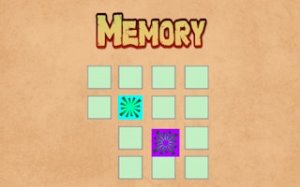
Memory Match Challenge presents a grid of face-down cards. Clicking or tapping a card reveals its image. Selecting a second card flips it; if the two images match, the pair remains face up. If they differ, both cards turn back over after a brief pause. The core task is to remember each image's position and use that recall to uncover every pair. The game counts your moves, so efficiency depends on planning which cards to reveal next rather than flipping at random.

Progression and Difficulty

Early rounds use small grids with few pairs, letting new players learn the rhythm of reveal, remember, and match. As you advance, levels add more cards and larger arrangements. Bigger grids increase the number of images to track and the time between seeing a card and needing to recall it, which raises the demand on short-term memory. The game does not add timers or penalties beyond the move counter, so the challenge comes from grid size and arrangement complexity.

Who It Suits

The game contains no violent or inappropriate content, making it suitable for children and adults. Sessions can be short, which fits quick breaks, but the move counter also supports longer play for anyone trying to improve their score. Because the rules are simple and the interface relies on clicking or tapping, no prior gaming experience is required. The main appeal is a straightforward cognitive workout built around visual recognition and concentration.


Editorial Notes

Compatibility

This H5 game runs smoothly on:
• Desktop computers (Windows / Mac) • Mobile phones (iPhone / Android)
• Tablets (iPad / Android)
🌐 Best experienced with Chrome, Safari, or Edge

Faq

Does Memory Match Challenge have a time limit?
No time limit is mentioned in the game description. The only performance measure stated is the move counter, which tracks how many flips you make. This means you can take as long as you need to recall card positions, and the challenge comes from grid size rather than time pressure.
Can I play Memory Match Challenge on a phone or tablet?
The description says you click or tap cards, which indicates the game supports both mouse and touch input. That makes it playable on desktop computers, laptops, phones, and tablets. No specific platform list is provided, but the control scheme is designed for either input method.
Is Memory Match Challenge suitable for young children?
Yes. The game states it has no violent or inappropriate content and is designed for players of all ages, from children to adults. The simple matching mechanic and absence of mature themes make it appropriate for kids, though younger children may need help with larger grids.
How does the move counter affect gameplay?
The move counter records how many card flips you make. It does not appear to end the game or impose a penalty, but it gives you a score to improve. Fewer moves generally mean you remembered more card positions and made fewer mismatches, so the counter encourages deliberate play over guessing.
Does Memory Match Challenge have multiple difficulty levels?
The game uses progressive difficulty rather than a separate menu of difficulty settings. As you complete levels, the grids grow larger and include more cards. This gradual increase keeps the challenge steady without requiring you to choose a difficulty mode before playing.
What skills does Memory Match Challenge help improve?
The game is described as a cognitive workout that supports short-term memory, concentration, and visual recognition. These are the skills directly exercised by remembering card positions and matching images. It is not a general brain-training program, but regular play targets those specific mental tasks.