GBox Tile Merge Puzzle
Reviews
GBox Tile Merge Puzzle delivers a straightforward tile-merging challenge with no time pressure and simple controls. Its strength lies in the tension between scoring and survival: every move either creates space or consumes it. Players who enjoy planning ahead and watching a board evolve will find it rewarding. The main limitation is that the core loop is familiar to anyone who has played similar merge puzzles, so it offers few surprises for veterans.
Description
Merging Mechanics
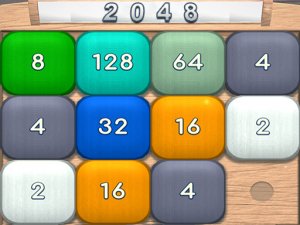
GBox Tile Merge Puzzle is built around a single, clear rule: when two tiles with the same number touch, they combine into one tile worth double the value. You move all tiles on the board in one of four directions using swipe gestures or keyboard arrows. Every merge adds points equal to the new tile's value, so larger combinations yield bigger rewards. The challenge isn't learning the rule—it's managing the board as empty spaces shrink.
Board Management and Decision Making
Each move shifts every tile in the chosen direction, which means one swipe can rearrange the entire board. That makes every decision consequential: a move that creates a merge in one corner might push a high-value tile into a cramped edge. Players who keep the board open by avoiding unnecessary shifts tend to last longer. The game ends when no moves remain because the grid is completely full, so the real objective is delaying that moment while still scoring.
Pacing and Accessibility
There are no time limits, so you can think through each move at your own pace. That makes GBox Tile Merge Puzzle suitable for short breaks or longer sessions without pressure. The controls work on any device—swipe on touchscreens, arrow keys on desktop—and the rules are simple enough for players of any age or skill level. The difficulty comes from the board state, not from complex inputs.
Approaches to Higher Scores
Planning several moves ahead helps you set up larger merges instead of settling for small ones. Prioritizing high-value tiles when they appear can maximize points, but only if you leave enough room for them to move. Regular practice builds a feel for how tiles shift in groups, which reduces accidental board locks. Patience often outperforms speed, since a rushed move can undo several turns of careful positioning.









Editorial Notes