Blue Morpho Butterfly Jigsaw Puzzle
Reviews
This is a single-image jigsaw puzzle built around the Blue Morpho butterfly, and it does not pretend to be more than that. The 64-piece count keeps sessions manageable, the preview image removes guesswork, and the absence of a timer makes it easy to pick up and put down. The bright wing colors give useful visual anchors, though the surrounding nature detail may slow less patient players. It suits casual puzzlers and anyone wanting a calm, focused break rather than a competitive challenge.
Description
What You Are Assembling
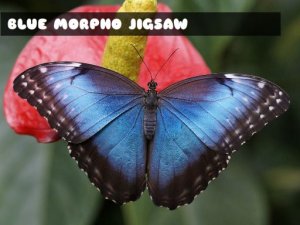
The puzzle recreates a detailed nature scene centered on the Blue Morpho butterfly, known for its bright blue wings. The artwork is the main draw: the image combines vivid wing colors with surrounding natural detail, so the pieces are not interchangeable blanks. That visual variety matters during play because it gives you identifiable regions to work on instead of forcing you to rely only on shape. The completed picture fills a 64-slot grid. [IMG_1]
How Placement Works
An empty grid sits on screen with scattered pieces nearby. Click a piece to select it, then click an empty slot to try placing it. Correct pieces lock in; incorrect ones do not. You can also drag and drop pieces if you prefer a more direct feel. A preview of the finished image is available at any time, which lets you check where a piece belongs before committing. The goal is simply to fill all 64 slots and complete the picture. [IMG_2]
A Calm, Untimed Session
There is no countdown and no penalty for pausing. You can stop mid-puzzle and return later without losing progress in the current session. Because nothing pushes you to hurry, the game suits short breaks or longer, focused sittings equally well. The interface keeps controls to clicking and dragging, so there is no setup or tutorial barrier before you start placing pieces. [IMG_3]
Approaches That Help
Starting with edge pieces is a reliable way to build a frame before filling the middle. The butterfly's bright blue wing areas are another useful anchor, since their color makes them easier to match than mixed background regions. Sorting pieces by color family before placing them reduces guesswork. Pattern recognition and patience carry more weight here than speed, which is why the puzzle works for a wide range of ages and experience levels. [IMG_4]







Editorial Notes