Green Light Challenge Arcade

Reviews
Green Light Challenge Arcade takes a familiar playground concept and builds a 3D arcade experience around it. The strength is its clarity: move on go, freeze on stop, and avoid elimination. That simplicity makes it accessible to all ages, while increasing timing variations keep it from growing stale. The absence of violent themes and real-world stakes suits family play. The main limitation is that the core loop depends on the same freeze mechanic every round, so players seeking varied objectives may find it repetitive over long sessions.
Description
Core Rules and Round Structure
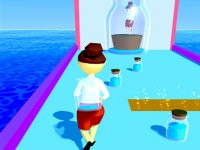
Green Light Challenge Arcade adapts the classic playground game into a 3D online format. Each round begins with players listening for voice commands. A go signal means you can move your character toward the finish area. A stop signal means you must freeze immediately. Any movement during a stop eliminates you from that round. The last player remaining wins the round and the associated prize pool. Visual signals on screen reinforce the voice cues, so you always have a clear reference for when to move or hold still.
Timing, Patience, and Strategic Movement
The challenge is not speed alone. Players who sprint recklessly during go signals often struggle to stop in time when the signal changes. Short, controlled movements let you make steady progress while staying ready to freeze instantly. Patience matters as much as reflexes. Waiting for a clear go signal and resisting the urge to creep forward during a stop is the difference between reaching the finish and being eliminated. As rounds progress, new timing patterns and variations appear, so you cannot rely on memorizing one rhythm.
Family-Friendly Design and Progression
The game contains no violent or mature themes. Its content is designed for family play, with easy-to-learn controls that suit all ages. Difficulty increases as you advance, introducing fresh timing challenges that keep rounds from feeling identical. The 3D environment and adventure theme provide a sense of progression, while the prize pool adds motivation without involving real-world stakes. Beginners can pick up the basics quickly, and experienced players still find depth in reading stop signals and managing their movement.






Editorial Notes