Lily's Teleport Quest: Cooperative Arcade
Reviews
Lily's Teleport Quest leans into cooperative puzzle solving rather than reflex-driven action. The teleportation device anchors every stage, and the gradual addition of multiple portals keeps the difficulty curve readable. Character abilities add a light layer of planning, especially when two players coordinate. The bright visuals and lack of punishing failure states suit younger players, though older family members may find the early stages simple. The main limitation is that the input does not detail the number of levels or characters, so the depth of content remains unclear.
Description
Portal Logic and Puzzle Flow
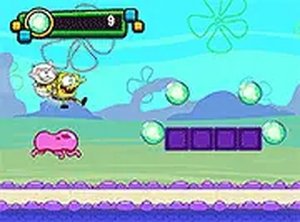
Each stage in Lily's Teleport Quest revolves around a teleportation device that players must understand before they can progress. Early puzzles introduce a single portal, letting players learn how activation and movement interact. Later stages combine multiple teleport points, so success depends on planning the order of actions rather than reacting quickly. Glowing portal rings and directional arrows communicate the intended path without relying on text, which keeps the puzzle logic readable for younger players while still offering older family members something to think through.
Character Switching and Teamwork
The adventure gives players a small cast of characters, each with a distinct ability. One might move heavy objects, while another can trigger distant switches. Because no single character can handle every task, players constantly consider who is best suited for the current obstacle. In two-player cooperative play, this becomes a shared exercise in timing and discussion. Solo players still manage the same team dynamic by swapping characters on the fly, which keeps the cooperative spirit intact even without a second person.
Visual Style and Gentle Feedback
Hand-drawn backgrounds shift from sunny beaches to whimsical forests, and character animations are smooth and expressive. Cheerful music and soft sound effects signal success or offer friendly feedback. There are no intense or frightening moments, so the atmosphere stays welcoming for the youngest players. The bright palette and consistent visual language also reduce fatigue during repeated sessions, which matters for a game designed around replaying stages.
Progression, Replay, and Accessibility
Completing levels unlocks new areas and mini-games that introduce fresh mechanics. Some stages emphasize timing, others memory, and a few simple pattern recognition, which keeps the experience varied. Completion stars give families a reason to revisit earlier stages and improve their results. Controls work with both mouse and touch input across desktops, tablets, and phones. Large labeled buttons and minimal text mean pre-readers can navigate with adult help, and there is no time pressure or punishing failure state, so any level can be retried instantly. [IMG_1]








Editorial Notes