Marble Path Navigation
Reviews
Marble Path Navigation delivers a focused puzzle experience built on route planning and marker collection. The lack of a timer makes it accessible for short breaks or extended sessions, while moving barriers and narrow passages add gradual difficulty. The tactile marble movement and clear visual design support concentration rather than flashy distraction. It suits players who prefer thoughtful, family-friendly logic games over fast-paced arcade challenges. The main limitation is that the core loop stays consistent, so variety depends on how the later stages combine obstacles.
Description
Maze Navigation and Marker Collection
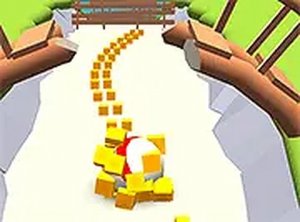
The core task in Marble Path Navigation is to move a small sphere from a starting point to an exit while collecting every scattered marker in the stage. Corridors twist and branch, so the route is rarely a straight line. Each layout demands observation before movement; rushing often means missing a marker or bumping into an obstacle. Because markers must all be gathered before the exit opens, players naturally plan a sequence rather than wander. The challenge comes from reading the space and adjusting the marble's path in real time.
Controls and Physical Feedback
Input is direct and platform-appropriate. On touchscreens, swiping tilts the view or nudges the marble. On desktop, the mouse or arrow keys perform the same function. The marble has a noticeable weight, rolling and stopping with a natural feel that makes small adjustments meaningful. There is no timer, so players can pause, study the layout, and move at their own pace. The interface stays clean with minimal on-screen elements, keeping attention on the puzzle itself.
Visual Clarity and Atmosphere
Bright colors and simple geometric shapes define the look. Pathways are outlined clearly against the background, which helps players trace routes quickly. The marble is rendered as a polished sphere that reflects light, giving a small visual cue as it moves. The overall presentation avoids distracting effects, which supports the logic-focused design. This simplicity is functional: it reduces eye strain and keeps the puzzle readable.
Progression Through New Obstacles
As stages advance, new elements appear. Some levels add moving barriers that shift position over time, forcing players to time their movements. Others require passing through narrow gaps or over raised edges. Difficulty rises gradually, with each new mechanic building on skills from earlier stages. Since there is no time limit, pressure comes from the puzzle design rather than a clock. This structure works for short sessions and longer periods of concentration alike.






Editorial Notes